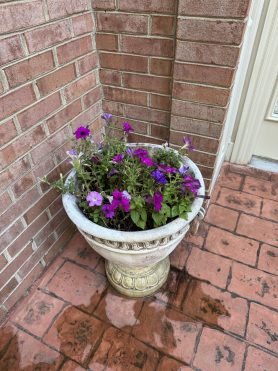

I can’t remember exactly when Carter, Ammon, Sean, and I first tucked those tiny petunia starters into Nana’s urns—sometime between 2018 and 2020, or maybe even earlier—but I remember how it felt; we four working together to make Nana (Joyce Carter Brown) feel happy and proud. Nana had two urns, one by her front door and one nestled between her garage doors, and after that first winter the petunias did what living things do when they’re given half a chance—they died back, then quietly self-seeded and returned, spring after spring. When Nana passed, I worried that without her gentle “petting” and without us there to water and fuss over them, they’d finally give up. Instead, in a way that still feels mysterious to me, the flowers near the front door faded, but the ones between the garage doors flourished. From July 2022 through June 2024, whenever we were at Nana’s house, I found myself on weeding and babying those stubborn blooms, learning that tending petunias isn’t so different from tending our own hearts: both need time, attention, and a bit of faith to keep growing. The day we brought Nana’s furniture to Knoxville, I wrapped the urn in padded towels and tucked it carefully behind my truck seat, determined that the life she had nurtured would keep going. Of course, the petunias made it safely to our new front porch in Farragut, and the photo you see captures the moment they began their next season with us.
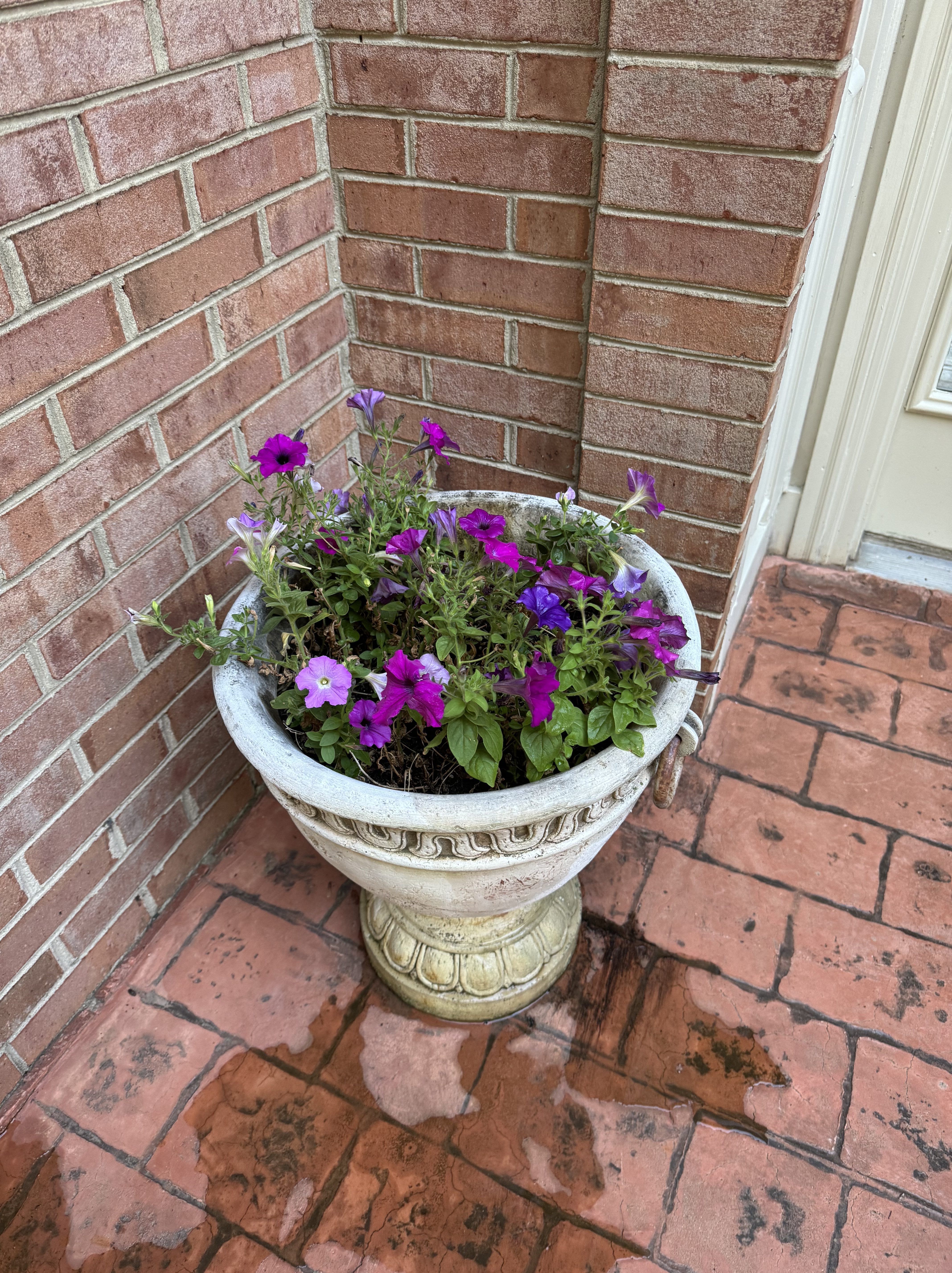
As the days grew shorter and the frosts set in during the autumn of 2024, I kept asking myself where Nana’s petunias would be safest. I moved the urn between our garage doors, hoping the extra winter sun would help them hang on. For a few weeks they tried, but the frosts finally took them, and I gently cleared away the dead foliage. The urn stayed there between the garage doors through the quiet winter months. Time moved on, and at last the spring of 2025 arrived. I carried the urn back to our front door, remembering how, at Nana’s house, tiny green petunia leaves would bravely push their heads up through the soil each year. I couldn’t recall exactly when in the spring they usually appeared, but I kept waiting and watching, as if looking for a sign that something cherished in our lives might return. Nothing. The urn remained by the front door until the middle of summer. Only a few blades of grass and stubborn weeds emerged. My heart sank, and I prayed, “Thank you, God, for the years you gave us with Nana and her petunias. I am glad they got to move with us and flourish for a season.” In that moment, I felt how much our own lives resemble those flowers—how we, too, bloom for a time and then make room for whatever comes next. I sadly moved the urn to our back deck, where it has remained. You all have seen our lovely Alberta spruces in my social media posts, the ones we bought at Home Depot. They now flank our front doors. We love them, and they should live for almost 20 years, quietly gracing our entryway with their evergreen steadiness, a different kind of flourishing.
Side story: when we moved into our house here in Knoxville, a beautiful tulip tree stood right beside our garage. Its elegant pink blooms welcomed us the very first time we saw the house on Saturday, March 16, 2024, and we were immediately smitten. By the time we actually moved in, the tree had traded its blooms for luscious green leaves, and we were already imagining the joy of seeing those blossoms return in March 2025. Then, in the summer of 2024, a crack appeared in the garage. We soon learned that the house had a history of foundation settling, and while the tulip tree’s roots were not the only cause, they were quietly adding to the problem. With heavy hearts, we accepted that we had to cut the tree down and grind the stump so the roots would stop harming the garage’s foundation. It felt like another lesson in how even something beautiful can, over time, put pressure on what we’re trying to build. Let me make a connection and build some schema for what is coming. The petunia urn sat about ten feet from the little shrub garden that surrounded the tulip tree. The tree company came in around March of 2025 to cut it down and, eventually, grind the stump. Nothing remained of that lovely tulip tree, and the small shrubs sit there to this day, a quiet reminder that growth as well as protection (we didn’t want the garage to tumble down(, both in gardens and in our lives, sometimes means letting go.
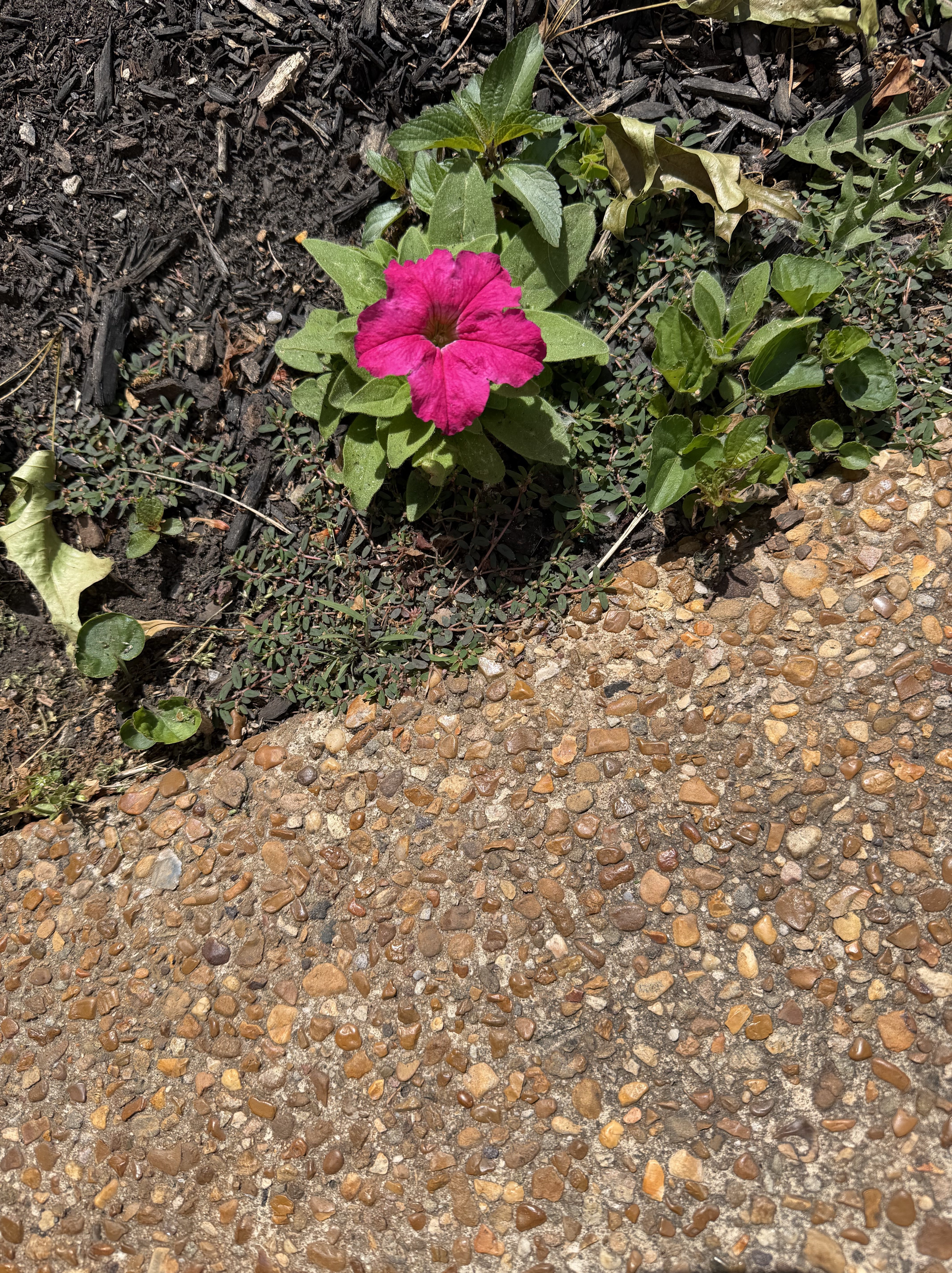
I love being outside. There isn’t constant care needed here in this yard like at McDonald Road. We are blessed to have an economical and kind lawn maintenance man who both mows and weed eats. Sean and I scratch around in the flower beds, pick up sticks, and are blessed with a wonderful pine thicket where we can haul the yard debris. Easter weekend this year, I was piddling in the yard and pulling some weeds in the scrub bed beside the garage. Right at the edge of the shrub garden, where it meets the pebbled driveway, I noticed a little green plant that did not look like a weed. It reminded me of the tiny sprouts of self-seeding petunias that once flourished in Nana’s urns. I thought, “No way!” I didn’t tell Sean or the family. I simply weeded around it and started watering it. Then several more sprouts appeared. I waited patiently for several weeks. Weeds or petunias? On Saturday, May 2, 2026, my question was answered. A beautiful pink petunia bloomed—a carbon copy of one of the colors Nana had in her urn. I was elated, and tears quickly filled my eyes. I wiped them away, snapped a photo, and texted it to Sean. He quickly came down, and we both stood and stared in nostalgic love and remembrance.
All summer long the petunias kept spreading, and their colors were exactly the same as the ones that had once filled the urn. I cherished every minute of weeding and watering them in this summer of 2026, quietly hoping that next spring and summer they will grow enough to cover the very space where the tulip tree once stood.
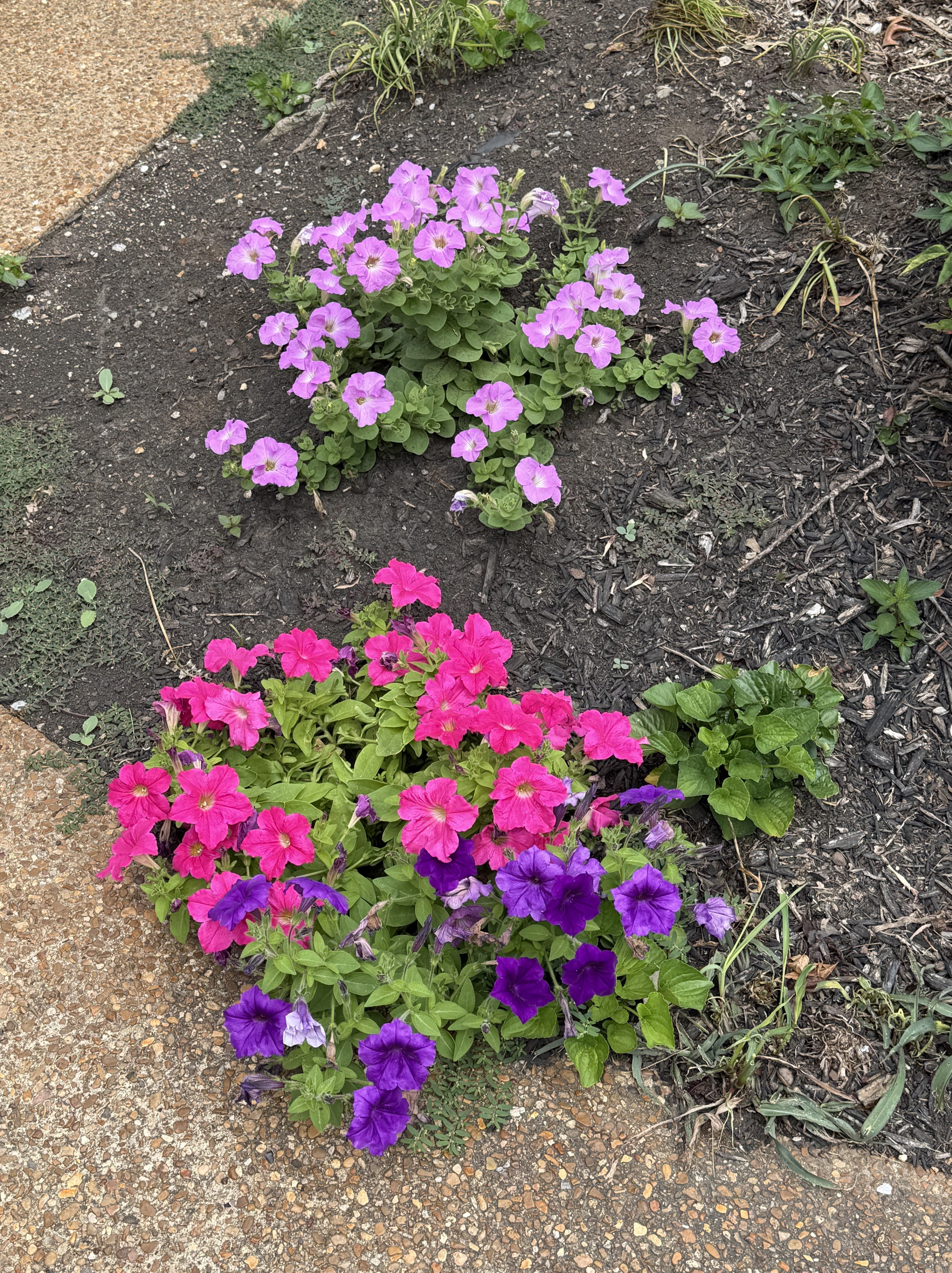
Botany tells us that petunia seeds can wait silently in the earth for years until the conditions are right to bloom, but this is more than mere “science” to me; it feels like a spiritual connection. Nana’s flowers returning to us out of nowhere after 16 months is a gentle reminder from God that love never really leaves us—it simply waits, then finds new ways to bloom and spread when the time is right. Just as those tiny seeds rested, unseen, until they could push beyond the small urn and spill into a bigger space, our hearts, too, can lie quiet and hidden after loss or change. Yet God invites us to trust that, in His time, the love we have received will stir again and help us grow beyond what we once thought possible. Like the petunias breaking free of their old container and flourishing in a wider patch of earth, we are called to let God lead us beyond our small, familiar spaces so we, too, can grow, flourish, and fill the world around us with beauty.