Haven Caylor-Brown's avatar

Remembering, Giving Thanks, and Christmas Magic

The Beauty of the Seasons

I believe every day, month, and season has its beauty and enjoyment. For more than 20 years, November and December have been my favorite time of year.

Remembering Loved Ones

When I talk and write about Daddy, Nanny, Granddaddy, Mamaw Wimpy, Nanny and Granddaddy Alexander, and Grandmaw Stone, just to name a few phenomenal folks, I realize that I am perpetually celebrating the Day of the Dead. I love that it connects All Saints’ Day on November 1 with All Souls’ Day on November 2.

From Thanksgiving to Christmas

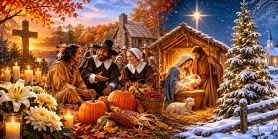
Thanksgiving reminds us of Squanto, the Native American, and the Pilgrims forming a friendship—an example of people from different cultures sharing a meal and giving thanks. Some of the original founders of this great nation were multiculturing in 1621, y’all! Then come the lights, symbolizing Jesus Christ, the eternal light, and the love of giving. God gave us Jesus through the Christmas season.

Maybe that’s the enchantment that November and December bring to my life : we remember, we give thanks, and we celebrate the greatest gift of all. Family, friendship, faith, and a little Christmas magic make this season incomparable. And that’s why it will always be my favorite time of the year.

Haven Caylor-Brown's avatar

Squanto (Español)

squanto_18


Hay personas en la historia a quienes Dios ha bendecido y usado con alegría y de ellas surgieron eventos maravillosos y positivos. Disfruto inmensamente la historia de Squanto, el nativo americano que se hizo amigo de los peregrinos. Vivió desde 1590 hasta 1622.

Era un contemporáneo de John Smith, el famoso amigo inglés de Pocahontas, e incluso lo conoció en 1614. No fue el honorable John Smith quien engañó y secuestró a Squanto (Tisquantum) y lo llevó a Europa, sino un capitán de mar inglés llamado Thomas Hunt. Hunt se llevó a Squanto a Málaga, España, y lo vendió como esclavo, pero por la gracia de Dios, Squanto terminó con sacerdotes cristianos que lo liberaron y lo enviaron a Inglaterra. En 1619 regresaba a Nueva Inglaterra con la ayuda de otro marinero, Thomas Derer. Desafortunadamente, los habitantes (incluida la esposa de Squanto, sus hijos y sus padres) de la aldea de Squanto habían sido casi erradicados por enfermedades europeas.

Squanto se convirtió en un “prisionero” de otra tribu de nativos americanos, los Pokanoket, cuyo líder era Massasoit. Squanto fue bien tratado, y Massasoit vio la importancia de sus habilidades de interpretación en inglés. Squanto fue finalmente liberado. Fue Squanto junto con otro nativo americano, Samoset, quien el 22 de marzo de 1621 entró en Plymouth para ayudar a los peregrinos con su nueva tierra. Squanto enseñó a los peregrinos a cazar mejor y, lo que es más importante, cómo criar y cuidar el maíz, los frijoles y la calabaza. Squanto, junto con los otros nativos americanos Pokanoket y los peregrinos, celebraron el primer Día de Acción de Gracias en octubre de 1621. La mayoría de los estudiosos dicen que duró dos semanas.

Nadie es perfecto, pero gracias a Squanto y su visión de la paz y la hermandad de diferentes razas y culturas, tenemos el maravilloso ejemplo de cómo las personas que son diferentes pueden entrelazar sus vidas en una existencia pacífica.

Haven Caylor-Brown's avatar

Squanto & The First Thanksgiving

There are people in history whom God has blessed and used joyously and from them flowed wonderful and positive events.  I immensely enjoy the story of Squanto, the Native American who befriended the Pilgrims. He lived from 1590 to 1622.

He was a contemporary of John Smith, Pocahontas’ famous, English friend, and he even met him in 1614. It was not the honorable John Smith who fooled and kidnapped Squanto (Tisquantum) and took him to Europe but an English sea captain named Thomas Hunt. Hunt took Squanto to Malaga, Spain and sold him as a slave, but by God’s grace Squanto wound up with Christian priests who freed him and sent him to England. By 1619 he was returning to New England with the help of another sailor, Thomas Derer. Unfortunately, the inhabitants (including Squanto’s wife, children, & parents) of Squanto’s village had been all but eradicated by European diseases.

Squanto became a “prisoner” of another Native American tribe, the Pokanoket, whose leader was Massasoit. Squanto was treated well, and Massasoit saw the importance of his English interpreting skills. Squanto was eventually set free. It was Squanto along with another Native American, Samoset, who on March 22, 1621 walked into Plymouth to help the Pilgrims with their new land. Squanto taught the Pilgrims to hunt better and most importantly how to raise and care for corn, beans, and squash. Squanto along with the other Pokanoket Native Americans and the Pilgrims celebrated that first Thanksgiving in October of 1621. Most scholars say it lasted for two weeks.

No one is ever perfect, but thanks to Squanto and his vision of peace and brotherhood of different races and cultures, we have the wonderful example of how people who are different can entwine their lives into a peaceful existence.